

Symptoms may not reveal early dysfunction
Fatigue, shortness of breath, and reduced exercise tolerance can be subtle, intermittent, or attributed to other conditions.
CGM is introducing qualified healthcare organizations to the AiTiA LVSD Silent Mode Study. Developed by Medical AI, AiTiA LVSD analyzes subtle electrical patterns within a standard 12-lead ECG to help identify patients who may have left ventricular systolic dysfunction.
Utilizing a simple IRB-approved protocol that does not disrupt normal clinical workflow, participating sites contribute to real-world clinical validation while continuing their existing ECG workflow and standard of care. AI-generated analyses remain hidden from clinicians and are not used for patient-care decisions during the study.

Clinical validation without disrupting physician workflow.
The Silent Mode Study evaluates AiTiA LVSD in real-world clinical environments where standard 12-lead ECGs are already part of care. Participation allows organizations to contribute research data without altering the established clinical workflow or standard of care.
Within the separate research environment, AiTiA LVSD captures and analyzes data from qualifying ECGs. The study data support Medical AI’s evaluation of algorithm performance, real-world workflow integration, and the ongoing regulatory review process. CGM works with qualified organizations to assess study fit, coordinate participation, and support implementation planning.
Left ventricular systolic dysfunction may develop gradually and remain unrecognized until symptoms become more pronounced. AiTiA LVSD is designed to identify ECG patterns associated with possible LVSD so physicians can determine when echocardiography or further cardiovascular evaluation may be appropriate.
Fatigue, shortness of breath, and reduced exercise tolerance can be subtle, intermittent, or attributed to other conditions.
A conventional ECG does not diagnose LVSD, while echocardiography requires added time, scheduling, and clinical resources.
AiTiA LVSD is designed to help physicians identify patients who may benefit from echocardiography or further cardiovascular evaluation.
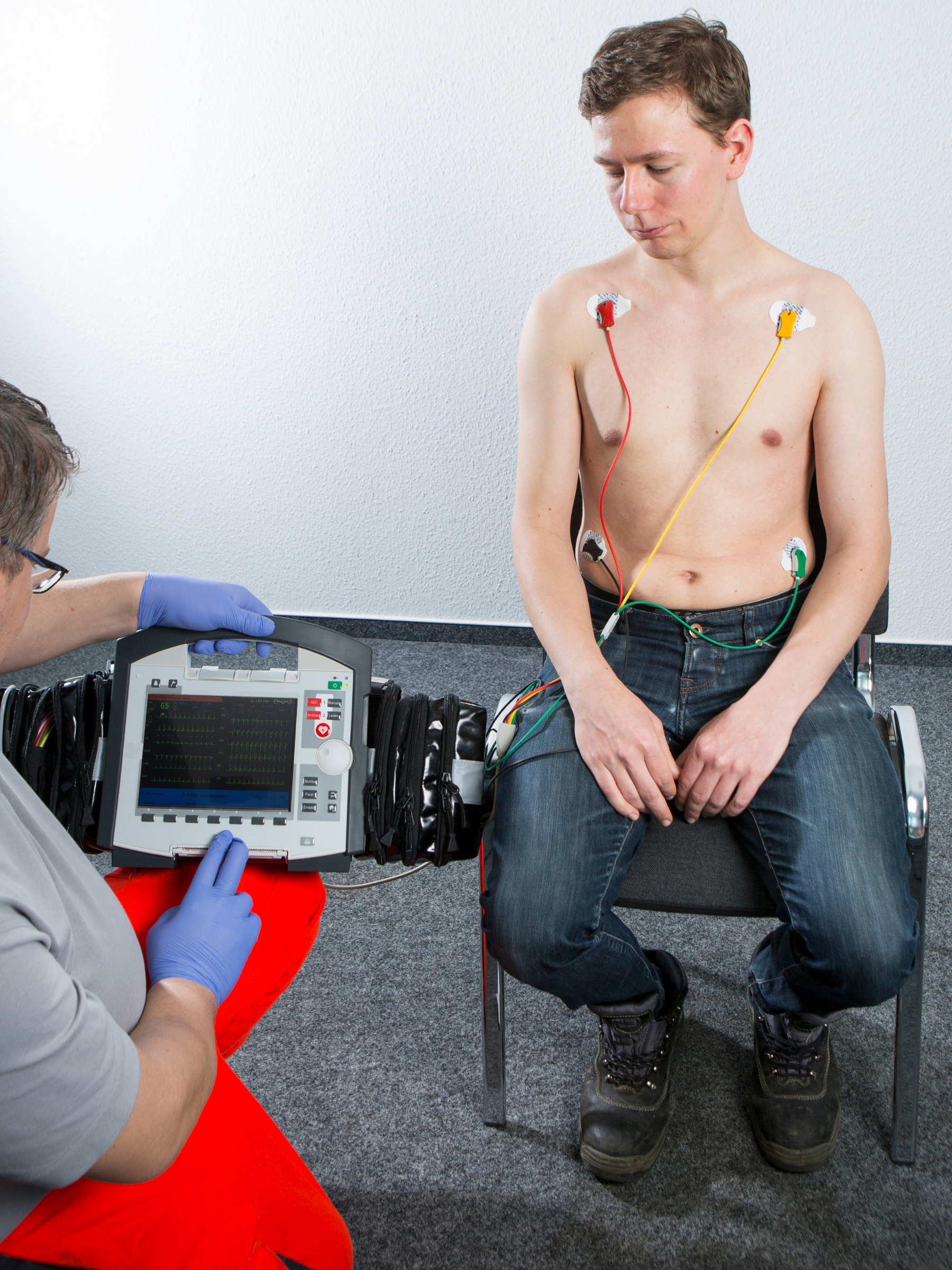

AiTiA LVSD analyzes approximately 60,000 numerical data points captured during a standard 10-second, 12-lead ECG. It evaluates subtle electrical patterns associated with possible left ventricular systolic dysfunction, including heart failure with reduced ejection fraction.
While conventional interpretation focuses on the visible tracing, AiTiA LVSD examines the underlying numerical data to provide an additional risk-assessment layer. Diagnosis, treatment, and follow-up decisions remain with the physician.
No additional electrodes, blood draw, radiation, specialized appointment, or separate patient procedure is required.
The platform is designed to analyze the ECG rapidly and generate a 0–100 severity score with a corresponding risk classification.
A higher-risk result may help physicians identify patients who should be considered for echocardiography or additional cardiovascular evaluation.
AiTiA LVSD is designed for integration with compatible ECG devices, ECG management systems, and EMR/PACS environments without adding steps to ECG acquisition.
AiTiA LVSD has been evaluated in peer-reviewed studies across multiple patient populations and clinical settings. The findings below highlight reported performance from selected research and should be interpreted within the design, population, and limitations of each study.
Observed in a 688-participant, single-center pivotal clinical study.
Observed in the same study using a 15% prevalence assumption.
Research supporting Medical AI’s broader ECG-AI platform and clinical development program.
AiTiA LVSD analyzes numerical data from a routine 12-lead ECG acquisition.
In a reported pivotal-study subgroup with paired in-vitro diagnostic results, AiTiA LVSD achieved an AUROC of 0.905, compared with 0.720 for NT-proBNP.
The platform is intended to complement—not replace—biomarkers, echocardiography, physician evaluation, or other standard-of-care diagnostics.
A standard 12-lead ECG anchors a research pathway that keeps routine clinical care separate from background AI analysis, performance validation, and regulatory review.
A familiar test anchors the entire study workflow.
The provider continues its established ECG workflow and makes clinical decisions without AI results.
Eligible ECG data move through the configured and protected study environment.
AiTiA LVSD analyzes numerical data from qualifying ECGs in the background for research purposes.
Study data support assessment of algorithm performance and real-world workflow integration.
Study data support clinical validation, workflow evaluation, and ongoing regulatory review.
Following regulatory authorization, AiTiA LVSD is intended for commercial clinical use under applicable agreements.
Participating sites continue their established 12-lead ECG workflow. Qualifying ECG data is securely transferred to the configured research environment, where AiTiA LVSD performs background analysis while the clinical workflow remains unchanged. Results remain hidden from clinicians throughout Silent Mode. Physicians continue to evaluate and treat patients using the same clinical information and standards of care they rely on today.
The site completes a standard 12-lead ECG as part of its normal patient-care workflow.
Qualifying ECG data is securely transferred to the configured research environment.
AiTiA LVSD analyzes qualifying ECG data without displaying results to the provider.
The resulting dataset supports performance validation, regulatory review, and evaluation of potential future clinical use.
Silent Mode enables Medical AI and participating research sites to evaluate technical performance, secure data transfer, operational fit, and workflow integration while FDA review is ongoing. AI output remains hidden from treating clinicians and plays no role in patient diagnosis, treatment, or clinical decision-making during the Silent Mode study.
FDA review is ongoing. Following regulatory authorization and commercial availability under applicable agreements, AiTiA LVSD is intended to provide physicians with an additional ECG-based risk signal that may support decisions about follow-up evaluation. Any retrospective access to study analyses or prospective clinical use remains subject to regulatory requirements and the final commercial arrangement.

Before activation, each qualified organization reviews the equipment, operational responsibilities, compensation terms, data provisions, installation process, and study requirements documented in the applicable agreement and Silent-Mode Research Protocol.
Eligible sites receive research-support compensation for qualifying administrative, technical, and ECG data-collection activities, subject to the executed agreement.
During the Silent Mode Study, AI results remain hidden while ECG data support ongoing validation. Following FDA authorization, participating organizations may elect to transition to clinical use.
GE HealthCare and Medical AI coordinate the equipment, software, training, and operational-readiness activities required before study participation begins.
ECG and related research data are handled in accordance with the privacy, security, regulatory, and data governance requirements established in the executed study agreement.
The Silent Mode Study is designed for qualified healthcare organizations that routinely perform standard 12-lead ECGs. Final eligibility depends on patient volume, workflow readiness, data connectivity, study requirements, and execution of the participation agreement.
Organizations with established ECG workflows that support participation in real-world clinical research.
Cardiology practices that routinely perform ECGs and evaluate patients for left ventricular systolic dysfunction, supporting future integration of FDA-authorized AI analysis into clinical care.
Clinicians who encounter cardiovascular risk factors before referral to specialty care.
Departments where standard 12-lead ECGs are routinely performed during rapid patient evaluation.
Practices providing comprehensive preventive medicine, executive health evaluations, and cardiovascular risk assessment.

Medical AI and its implementation partner, GE HealthCare, coordinate the equipment, software, installation, configuration, staff training, and technical support required for study participation. These resources are provided to the participating organization at no cost during the study. Medical AI retains ownership of all study equipment, which is provided solely for participation in the research program.
GE MAC 5 ECG system mounted on a mobile cart with standard accessories.
GE MUSE NX ECG management system, installed and configured for the study workflow.
Secure Microsoft Azure cloud connectivity for the transmission and storage of qualifying ECG data within the configured research environment.
AiTiA LVSD operating in Silent Mode, analyzing qualifying ECGs within the research environment while keeping AI results hidden from participating clinicians.
Delivery, installation, configuration, and training coordinated by GE HealthCare in collaboration with Medical AI.
Technical support and maintenance coordination provided throughout the study period to support continued operation of the research environment.
The current Silent Mode Study focuses on AiTiA LVSD, but the underlying platform is intended to support a broader portfolio of AI-enabled ECG analyses over time.
As additional algorithms complete clinical validation and receive applicable regulatory authorization, providers may be able to evaluate a broader range of cardiovascular conditions through the same established ECG workflow.
For participating organizations, the Silent Mode Study represents more than a single research initiative. It provides an opportunity to participate in the early development of an ECG-AI platform designed to evolve with future clinical applications.
Medical AI develops the AiTiA ECG-AI platform through the expertise of physicians, clinical researchers, AI scientists, and software engineers. Its clinical program includes peer-reviewed research, international hospital adoption, and continued advancement of ECG-AI technology across regulated healthcare markets.
CG Moneta is introducing qualified U.S. healthcare organizations to the AiTiA LVSD Silent Mode Study and supporting provider engagement, study evaluation, and future clinical commercialization subject to regulatory authorization.
CG Moneta is working with qualified healthcare organizations to evaluate participation in the AiTiA LVSD Silent Mode Study. Participating sites can contribute to the real-world validation of an ECG-AI platform while continuing their established standards of care.
Request study information to review site eligibility, workflow requirements, implementation support, research-support compensation, data provisions, agreement terms, and anticipated activation timing.

112 Giffordtown Lane
Unit 269
Little Egg Harbor, NJ 08087